
How did the Bread Hub arise?
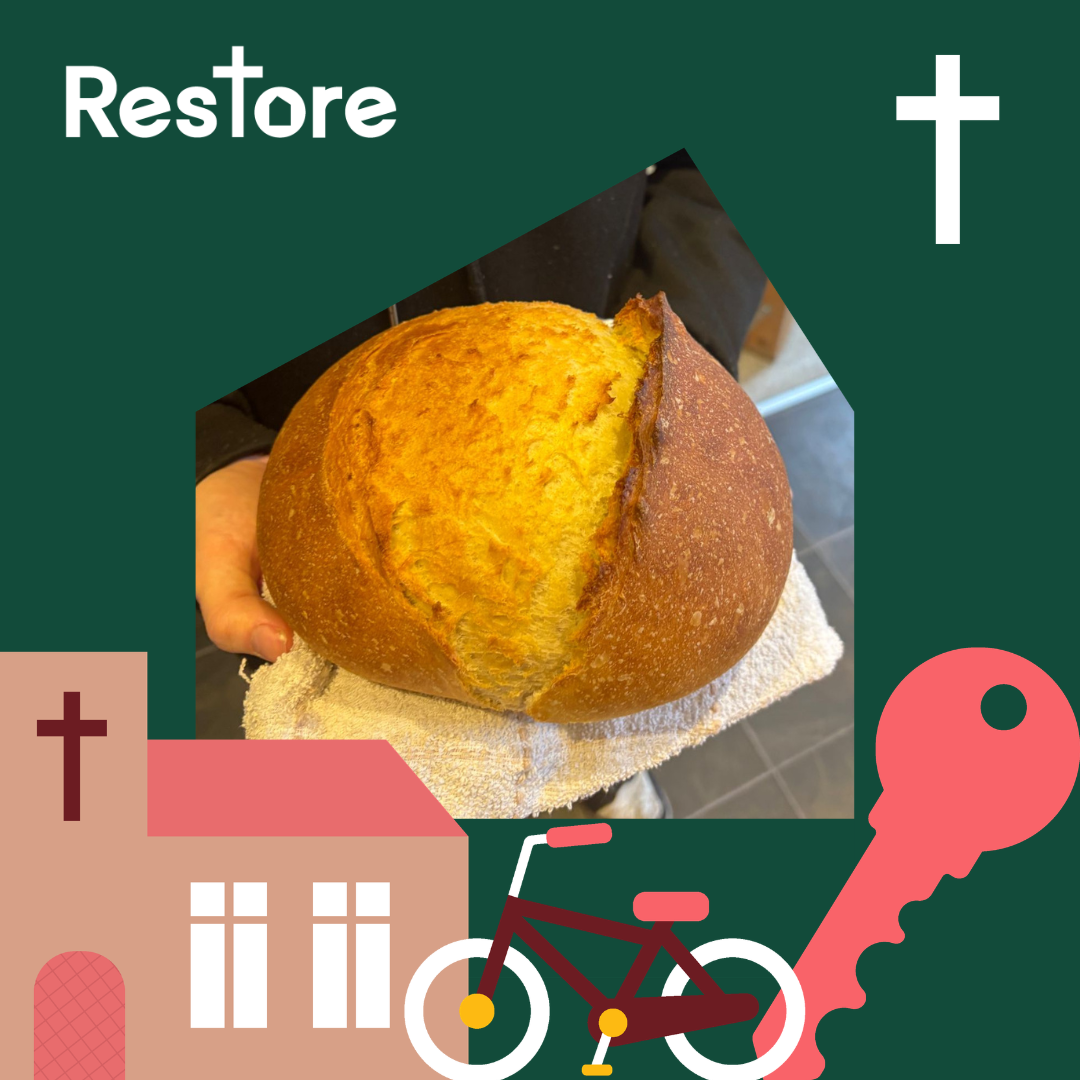
If you read our newsletter or social media posts, you will be aware that we’ve launched a new hub group in the last few weeks. Our Bread Hub has been established in response to resident feedback that they would like a hub which has a more direct Bible study focus. We’ve been running a Bible study after one of our hubs for a while now, but it was tagged onto the end, so that anyone who didn’t want to participate could still attend the first part of the hub without any pressure to join in. However, so many residents were choosing to stay for Bible study and were eager to engage with this in a more structured way, that we decided to make it a more prominent feature. There is no requirement to attend bread hub, or engage with Bible study, it is entirely voluntary. There are other hubs throughout the week which don’t have a faith focus, so for residents who don’t wish to engage with that side of our work, they have other options available to them.
So, why bread? Well, firstly, because bread is a common Biblical metaphor for God’s provision: whether that be the manna provided in the desert during the Exodus; or Jesus referring to himself as ‘the bread of life’ in John 6; or the request in the Lord’s prayer to ‘give us today our daily bread,’ Christian readers will be familiar with this imagery representing that God cares for and meets the needs of His people.
Secondly, because there is actual bread! Residents have been learning the skills of breadmaking by kneading, proving and baking their own dough, with the Bible study taking place whilst they wait for various stages of the breadmaking process to happen. The exuberance on the faces of residents who attended the inaugural bread hub was a sight to behold, as they realised that they had produced their own loaf of bread entirely from scratch. The confidence boost this gave them would be worth the effort, even if this was the only outcome, but the learning process held so much more than simply learning how to make a loaf of bread: patience whilst waiting for dough to rise, precision in weighing and mixing ingredients, attention to detail whilst kneading and shaping their loaves, and hopeful expectation of waiting until the loaf had finished cooking to see (and taste!) how the final product had turned out.
The transferable skills don’t end with the breadmaking either: through Bible study (even if we discount any of the spiritual benefit we believe this discipline affords) residents who participate are learning numerous useful life skills: how to contribute to group discussions; listen to other people’s opinions; offer (and receive) constructive feedback; tolerate different viewpoints; critically analyse written material, and retrieve information from a text in order to respond to questions.
Finally, there is the benefit to the wider Restore community. In the same way that a small amount of yeast causes the whole batch of dough to rise, when one individual receives good news, it can positively impact the wider group. We encourage our residents to support one another: encouragements and blessings can be shared, even multiplied, when people build strong support networks and understand the value of community.
As we head towards Easter, a crucial turning point in the Christian calendar, we recall another moment when bread was symbolic in the Bible: as Jesus sat with His disciples, moments before heading to the garden of Gethsemane and His arrest, He broke bread with His followers, saying, “This is my body given for you; do this in remembrance of me.”[1] During this season of Lent, we remember that Jesus’ primary objective in coming to earth was to suffer on the cross in our place. He gave Himself so that we could have a home in Heaven with Him. As a team, we are acutely aware that our role at Restore is not only to provide a roof over someone’s head in this life, but to help point them towards the eternal home they have waiting for them in Heaven, should they choose to accept it.
If this message resonates with you and you would like to support us, then, just as bread dough needs yeast to rise, we need financial support to continue providing homes, hope and community. We cannot do the work we do without regular donors who underpin our work financially. Thank you to those who already give. If you would like to become a regular supporter and help us end homelessness in York, then please follow the link below.
If you would like to support our work financially, please donate here. Thank you.
To find out more about the work of Restore please:
· sign up for our monthly newsletter
· follow us on Facebook
· follow us on Instagram
[1] Luke 22:19 https://www.biblegateway.com/passage/?search=Luke%2022&version=NIV